Leaves left on a New Jersey lawn all winter smother grass and invite disease. Here's
what happens under the pile and when to clear it. Call (732) 642-8686.
Every fall somebody decides the leaves can wait until spring. It's cold, the season is
over, and the lawn is going dormant anyway. What's the harm in leaving them? By April that same lawn has grey
patches, thin spots and a smell when you rake it. Leaves left on a lawn over winter in New Jersey do more damage
than most homeowners expect, and the damage is not cosmetic. It is the grass dying under a blanket it cannot push
through. The problem is not the leaves themselves. A light scattering breaks down and feeds the soil, which is why
mulching mowers exist. The problem is volume and moisture. Once a layer gets thick enough to mat down under rain
and snow, it stops behaving like organic matter and starts behaving like a tarp. This article covers what actually
happens under that layer through a central New Jersey winter, why spring damage traces back to November, and
when clearing makes the difference between a lawn that wakes up and one that has to be replaced.
The Grass Underneath Stops Getting Light
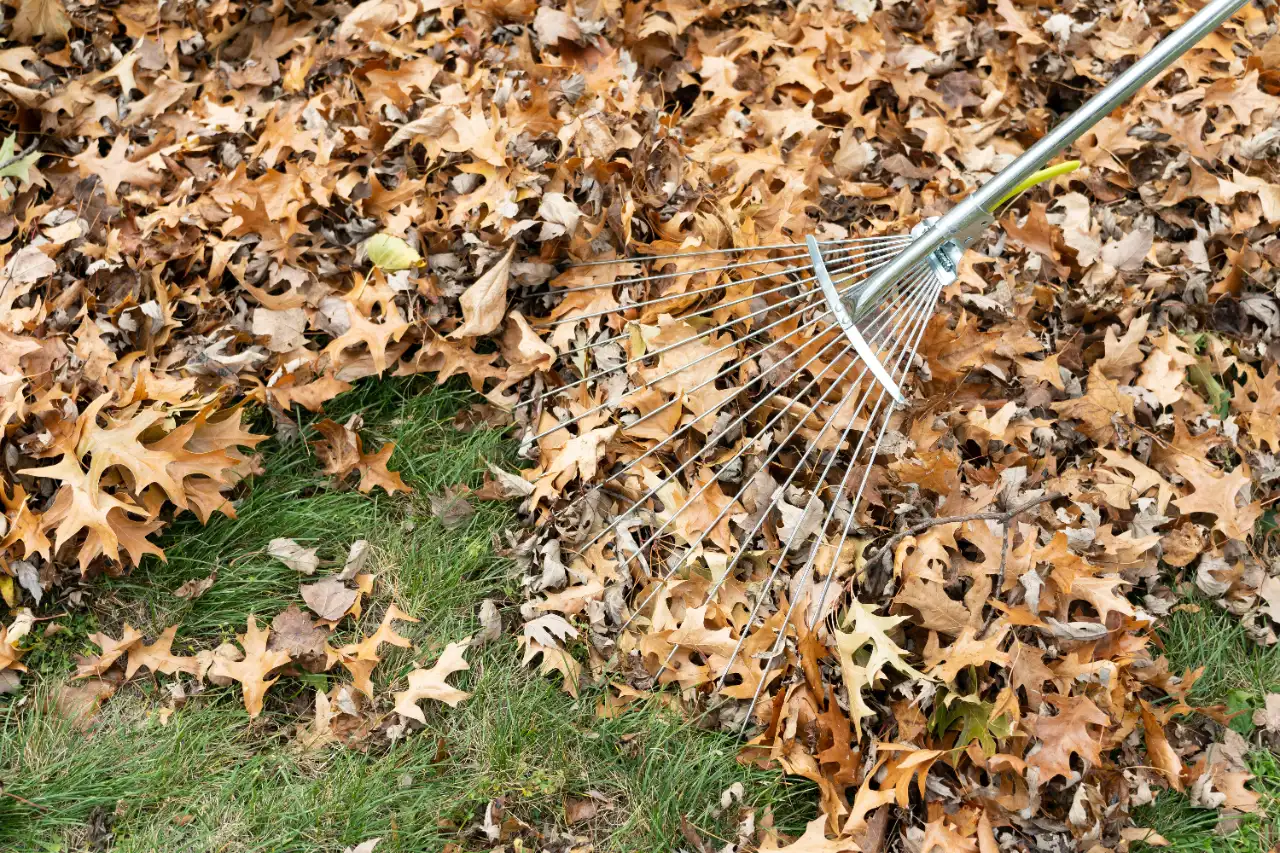
Grass does not fully stop growing in winter. It slows down, but the crowns stay alive and keep
producing energy on mild days, which in central New Jersey happens more often than people think. That process
needs light. A matted leaf layer blocks it completely, so the plant burns through stored energy without replacing any
of it. By March the crown is running on empty. That's why the damage shows up in patches shaped exactly like where
the leaves piled deepest, usually along fences, foundations and the low corner of the yard. The grass in the open
middle of the lawn comes back fine. The bordered areas do not, and reseeding them every spring becomes an annual
Wet Leaves Trap Moisture and Invite Snow Mold
A leaf layer holds water like a sponge and releases it slowly. Under snow cover that creates
constantly damp, dark conditions right at the soil line, which is exactly what fungal diseases need. Snow mold is the
common one here. It shows up in spring as circular grey or pink patches with matted crusty grass, usually in the same
spots where the leaves sat. Mild damage recovers with raking and time. Severe damage kills the crown, and those
areas need reseeding or sod. Central New Jersey winters cycle between freeze and thaw rather than staying frozen,
which makes it worse. Every thaw wets the layer again. A dry lawn under snow is far safer than a lawn packed with
Matted Layers Compact and Suffocate the Soil
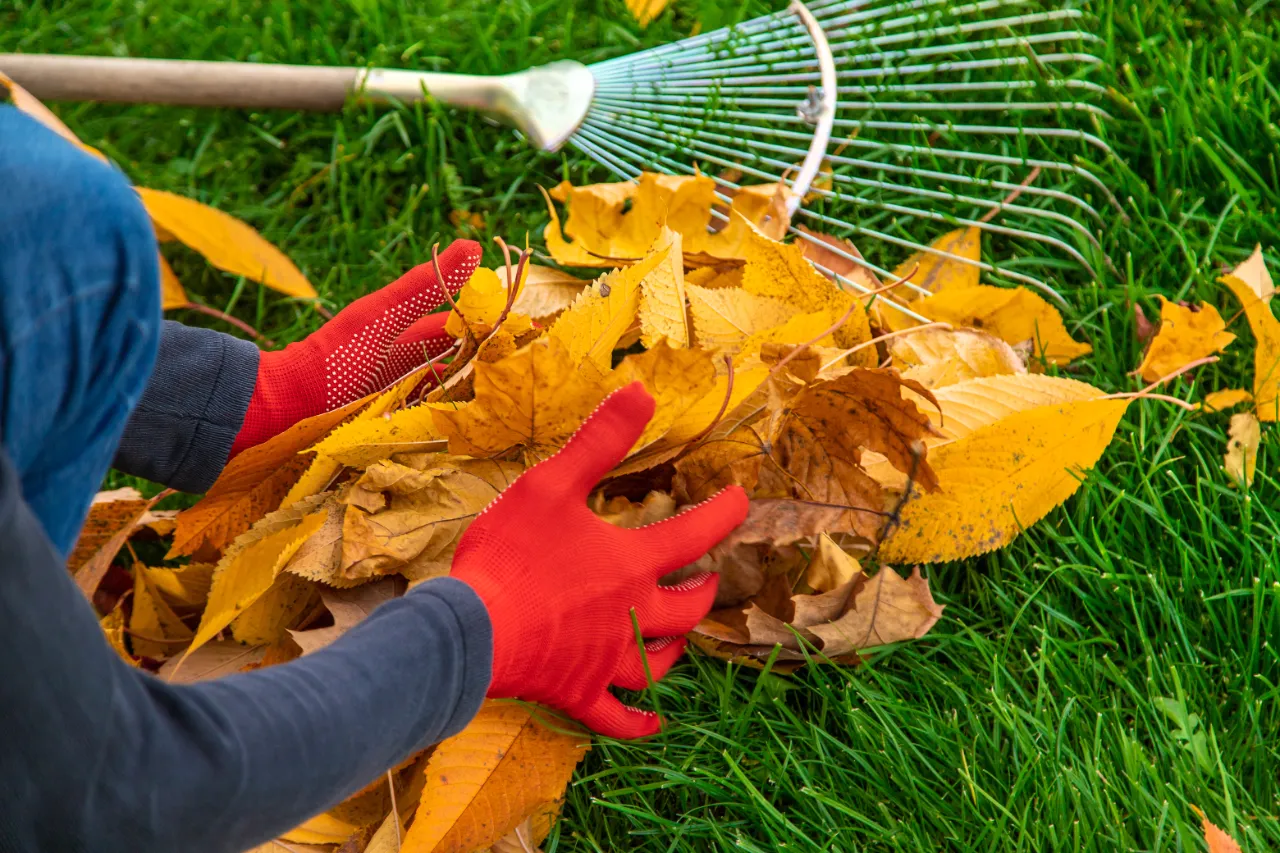
Leaves that sit through a winter do not stay fluffy. Rain, snow and foot traffic press them into
a dense mat that water struggles to pass through and air cannot reach at all. Soil underneath goes anaerobic, which
slows down the microbial activity that breaks organic matter into anything useful. So the layer sits there instead of
composting. Come spring you are pulling up a wet mat, not raking loose leaves, and the soil underneath is compacted and sour. On borough lots with clay heavy soil this compounds a problem that already exists. The lawn is fighting
compaction from the start, and a winter under matted leaves sets it back further than a single spring cleanup can fix.
When to Clear Leaves on a New Jersey Property
The useful rule is simple. If you can see grass through the leaves, a mulching mower handles
it. If you cannot, it needs to come off. Timing usually lands late October into November, after the bulk of the drop but
before the first sustained freeze locks everything down. Properties with heavy canopy often need two passes,
because different species drop weeks apart and one visit leaves you looking at a covered lawn again. Spring cleanup is
the backup, not the plan. It clears what winter left, but it cannot undo four months of a lawn sitting in the dark. The
properties that stay healthy are the ones cleared in fall, then cleaned again in spring for what blew in over the winter.
If the layer is light, yes, and it feeds the soil. Once leaves cover the grass
completely, mulching just chops them into a denser mat. The test is whether
Depends on the canopy. Properties with a few trees usually manage on one
pass. Heavy tree cover drops in waves over several weeks, and those yards
Clear them early in spring, before the ground warms. Rake the matted areas to
break up crusted patches and let air in. Thin spots may need reseeding or sod,
Less so. Beds tolerate a leaf layer better than turf does, and it insulates roots.
The issue there is matted material holding moisture against plant stems, which
The opposite. Snow presses the layer down and keeps it wet, which is exactly
what snow mold needs. A lawn cleared before the first storm is in far better