Too little mulch lets weeds through, too much suffocates roots. Here's the depth that
Mulch is one of the few landscape jobs where doing more is worse than doing less.
Most homeowners know it suppresses weeds and holds moisture, so the logic goes that a thicker layer does both
better. It doesn't. Past a certain depth mulch stops helping the plants and starts working against them, and the
damage takes a couple of seasons to become obvious. Knowing how deep mulch should be is the difference between
a bed that improves every year and one that slowly declines while looking fine from the street. The working number is
two to three inches. That's enough to block the light weed seeds need, enough to slow evaporation, and thin enough
that water and air still reach the root zone. It sounds like a small margin, and it is. The most common problem on
established properties isn't thin mulch. It's beds that have been topped up every spring for a decade without anything
Two to Three Inches, and Why That Range
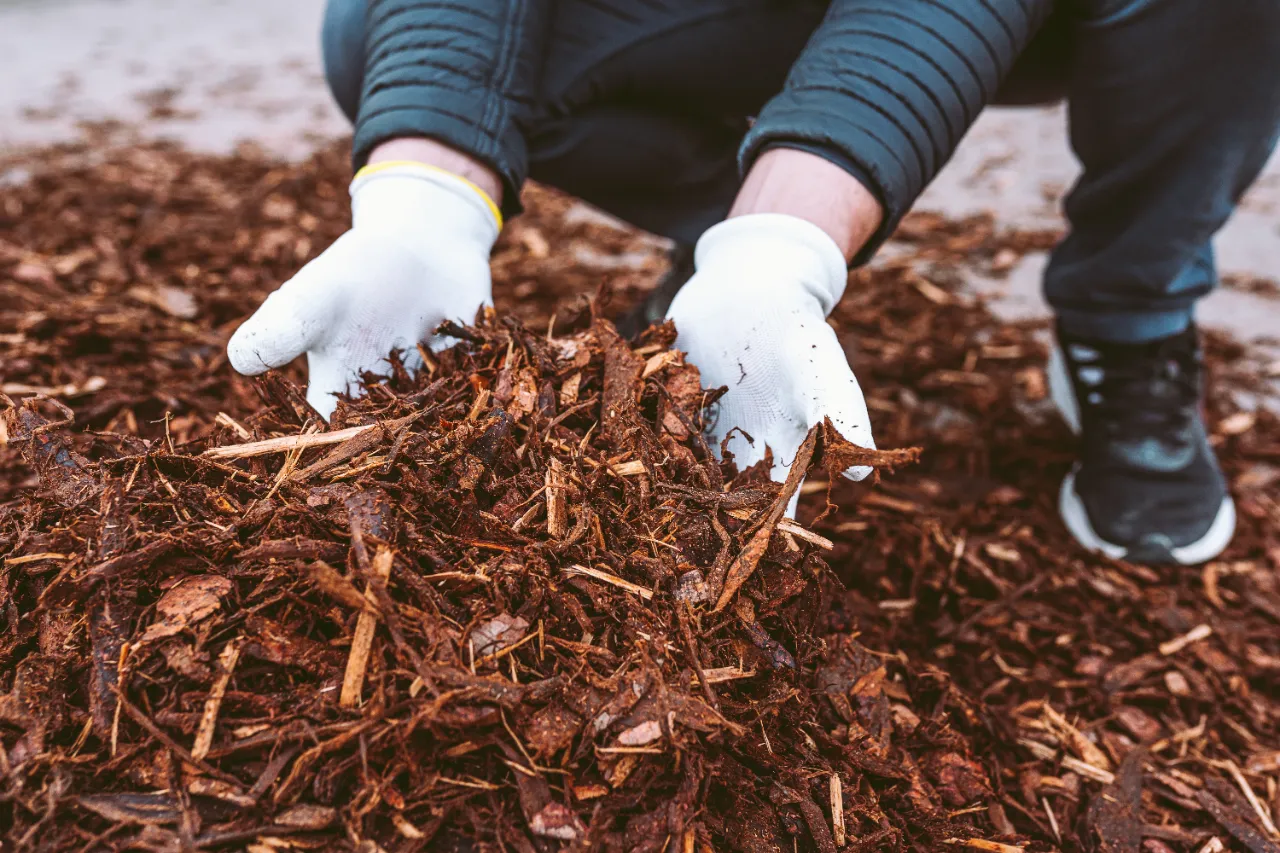
Below two inches, light gets through. Weed seeds sitting in the top layer of soil germinate the
moment they can see, which is why a thin bed looks clean in April and looks like a weed patch by June. Above three
inches, water has trouble reaching soil in a normal rain, and the layer starts holding moisture against the crown of the
plant instead of in the ground beneath it. Roots also respond to a deep layer by growing up into it, which puts them in
material that dries out fast and offers no nutrition. So the plant ends up more drought vulnerable, not less. The range
exists because bed conditions vary. Shaded damp beds do better toward two, dry exposed ones toward three.
The Buried Bed Problem on Older Properties
Add two inches every spring, take nothing out, and after eight years the bed is sitting well
above where it started. This is extremely common on older properties, and it shows up in three ways. Mulch spilling
over the edge onto the lawn, plants that look like they're sinking, and material piled against the siding or the
foundation. That last one is the expensive version, because it holds moisture directly against the house. The fix is not
another top up. It's removing depth first, getting the bed back down to grade, then applying a normal layer. A bed
that's already four inches deep needs a subtraction, and any crew that quotes a straight top up on it hasn't looked
Never Pile Mulch Against Trunks or Stems
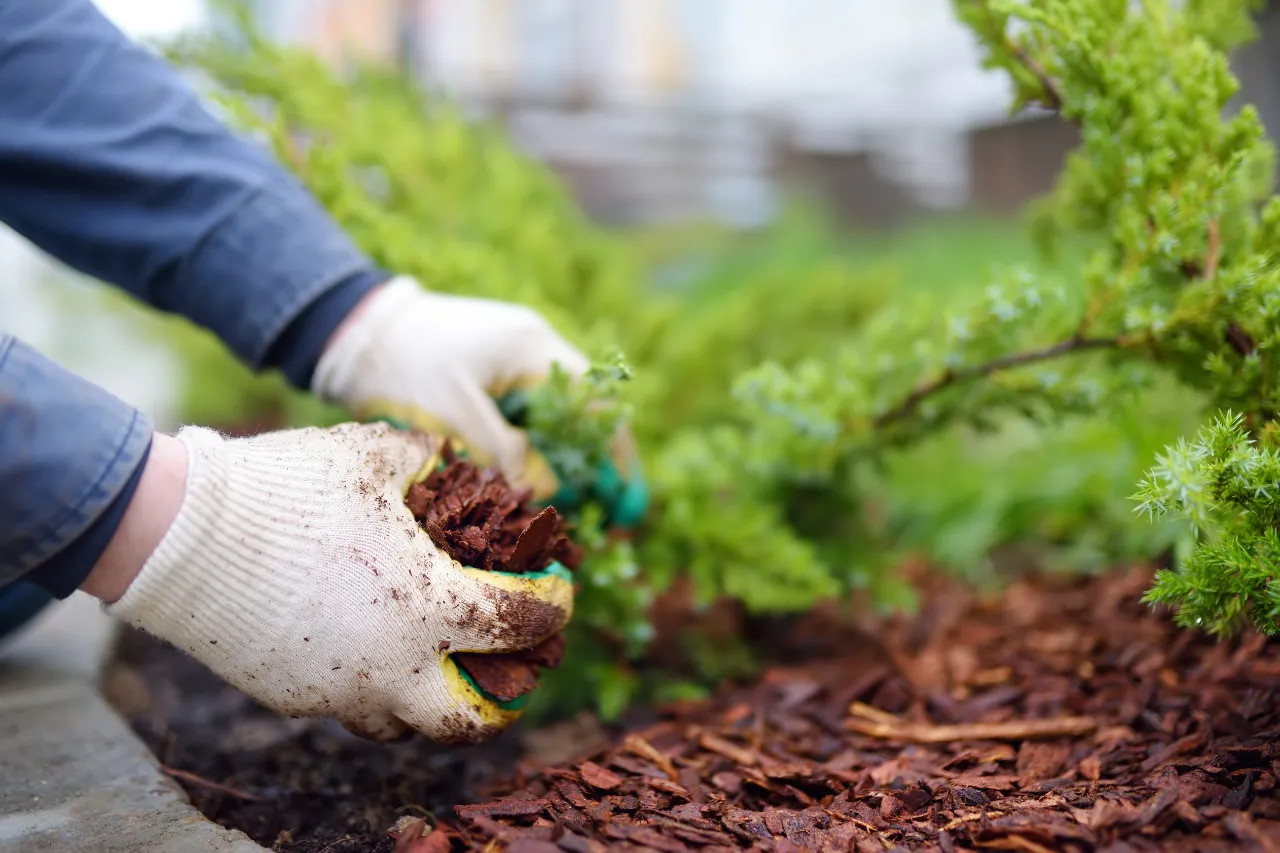
The mulch volcano around a tree trunk is the most visible mistake in residential landscaping,
and it kills trees slowly enough that nobody connects cause to effect. Bark is not designed to stay wet. Buried under
mulch it stays damp constantly, which invites rot and lets roots grow up into the mulch and circle the trunk. Those
girdling roots strangle the tree over ten or fifteen years. The same principle applies at a smaller scale to shrubs and
perennials. Mulch goes around the plant, not against it, leaving the base visible. A few inches of clearance at the stem
costs nothing and prevents the one mulch mistake that actually kills what you're trying to protect.
Topping Up Versus Replacing
Not every bed needs new material every year. If the existing layer still has depth and hasn't
broken down, turning it with a rake restores the color and breaks up any crust that formed, which handles most of
what people want from fresh mulch. If it's thin and mostly composted, a light top up brings it back to range. If it's matted, sour smelling or already past three inches, it needs removal before anything goes on. Judging that takes ten
seconds with a hand in the bed and saves both money and plant health. The annual reflex to add more, regardless of
what's already there, is what creates the buried beds in the first place.
Two to three inches in most beds. Thinner lets light through and weeds come
up. Thicker keeps water from reaching roots and holds moisture against plant
Depends what's there. A thin broken down layer gets turned and topped. A
matted layer, or anything already at three inches, comes out first. Adding on top
Bark held wet rots, and roots grow up into the mulch and circle the trunk. Those
girdling roots strangle the tree over a decade or more. Mulch goes around the
Does mulch actually stop weeds? It cuts them down substantially, it doesn't erase them. Seeds blow in and root
on top of the layer regardless. What mulch blocks is the ones already in the soil
Once a year is typical, usually in spring after cleanup. Some beds only need
turning rather than new material. The right answer depends on what depth is
What time of year is best to mulch? Right after spring cleanup, once beds are cleared and the soil has warmed.
Mulching over cold wet ground traps the cold in and delays everything by a
1. Every article runs roughly 1,000 to 1,100 words with four H2 sections at 110 to 130 words each, an intro of 165 to
2. Add Article schema plus FAQPage schema on each post. The FAQ blocks are unique per article, so no duplicate
3. Internal links point only to pages that exist in this project. No article links to another article, since the remaining six
4. No statistic, study, percentage or client story appears anywhere. Everything stated is either horticultural practice or
5. Articles one, two and four are seasonal. Publish all six now for indexing age, then push articles one and four in late
confirmation of whether the client wants author bylines on posts.